
πŸ“ž Call for a Free Quote: 561-960-5725

Attic Mold Remediation in West Palm Beach, FL

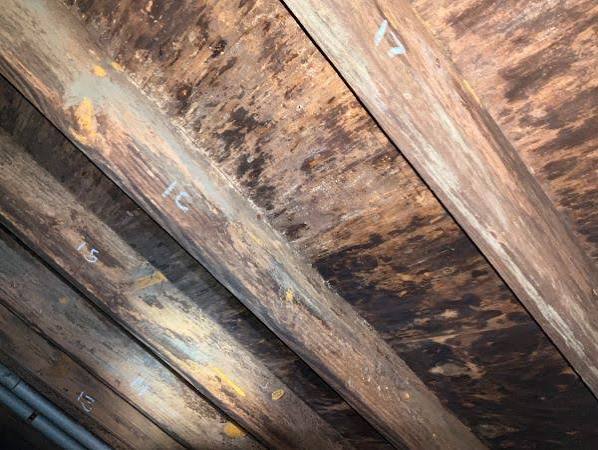
Mold growth across attic rafters and roof decking in an older West Palm Beach home

West Palm Beach's older homes β€” especially the barrel-tile roofs common in the 1920s-era historic districts β€” are prone to slow attic leaks that go unnoticed until a stain or smell shows up on the ceiling below. Uninsulated attic decking also lets humid outside air meet cooler ductwork, causing condensation that soaks roof sheathing and framing from the inside without any roof leak at all.

We inspect the full attic β€” decking, rafters, ductwork, insulation β€” to find whether the source is a roof failure, a ventilation problem, or condensation, because the fix is different for each. Wind-driven rain during hurricane season can also push water past flashing and vents that hold up fine in normal weather, so post-storm attic checks are one of our most common calls between June and November.

We remove affected decking or insulation as needed, treat the framing, and can flag ventilation fixes (soffit vents, ridge vents, insulation upgrades) that prevent the same problem from recurring next wet season.

πŸ“ž Call 561-960-5725

Request This Service

* Indicates required field

Barrel-Tile Roofs and Slow Leaks in Historic Homes

West Palm Beach's older housing stock, especially the barrel-tile roofs common in the 1920s-era historic districts, is prone to slow leaks around cracked or shifted tiles that can feed moisture into attic decking for months before a stain shows up on the ceiling below. By the time it's visible from inside, the attic side of the problem is usually further along than the ceiling stain suggests.

Condensation Without Any Roof Leak at All

Uninsulated attic decking lets humid outside air meet cooler ductwork running through the attic space, and that temperature difference causes condensation that soaks roof sheathing and framing from the inside β€” with no roof failure involved at all. We check for this specifically, since treating it like a roof leak (patching shingles or tile) does nothing to fix a ventilation-driven condensation problem.

Post-Storm Attic Checks and Prevention

Wind-driven rain during hurricane season can push water past flashing and roof vents that hold up fine in normal weather, which is why post-storm attic checks are one of our most common calls between June and November. After remediating affected decking or insulation, we flag ventilation fixes β€” soffit vents, ridge vents, insulation upgrades β€” that prevent the same problem from recurring next wet season.

Attic Remediation Process, Step by Step

We set up containment at the attic access point first, since spores disturbed during attic work can otherwise drift straight down into a hallway or closet below. Negative-air filtration runs even in a vented attic space, because natural airflow alone doesn't stop spores from settling on insulation and framing throughout the space while we work. Affected decking or insulation gets removed and bagged, remaining trusses and rafters are HEPA-vacuumed, and an antimicrobial or encapsulant is applied to treated framing depending on the extent of staining. We finish with clearance sampling taken directly from the attic space rather than just the room below it, since attic air doesn't always mix evenly with the living space air.

Signs of Attic Mold You Can Spot Without Going Up There

You don't need to climb into the attic to notice some of the early warning signs. A musty smell coming specifically from AC supply vents is a strong clue, since the air handler and ductwork often sit in the attic and pull that space's air directly into circulation. Brown or yellow ceiling stains, especially ones that seem to spread slowly rather than appear all at once, usually mean a slow leak has been feeding the attic side of that ceiling for a while. A noticeable jump in cooling bills without any change in usage can also point to wet insulation, since saturated insulation loses much of its R-value and makes the AC work harder to hold the same temperature.

Insulation: Replace or Treat?

Whether attic insulation can be treated in place or needs to be replaced depends on the material and how saturated it got. Blown-in cellulose that's been wet is essentially always a full replacement β€” once cellulose fibers absorb water and dry out, they compact and lose insulating value even if visible mold is removed, and reused wet cellulose is prone to regrowth. Batt insulation is sometimes salvageable if the wetting was limited and caught early, since fiberglass itself doesn't feed mold growth the way organic material does, though any batt with visible surface growth still gets removed. Spray foam attics bring a different consideration entirely β€” foam creates its own vapor barrier, which means a leak in a foam-insulated attic can trap moisture against the roof deck in ways that aren't always visible from inside the living space.

Cost Factors Specific to Attic Jobs

Attic jobs price out differently than a typical interior room for a few practical reasons. Roof access and attic height affect labor time β€” a cramped, low-clearance attic takes longer to work in than a walk-up space. The extent of decking that needs replacement versus simple treatment is a major cost driver, as is how much insulation has to be replaced and at what R-value. When the root cause is an active roof leak rather than condensation, we also coordinate scope and timing with a roofer, since remediating attic mold without fixing the leak that caused it just resets the clock on the same problem.

How This Differs from Roof Leak Repair Alone

A roofer's job is to stop water from getting into the attic in the first place β€” replacing cracked tiles, resealing flashing, or patching underlayment. That's a necessary fix, but it's a completely separate scope from remediating the mold growth that's already colonized decking, framing, or insulation because of the leak that's now been repaired. We regularly work attic jobs where the roof has already been fixed by someone else and the mold that grew during the months the leak went unnoticed is what's left to address β€” the two trades solve different halves of the same problem, and skipping either one leaves the job incomplete.

Attic Ventilation Types and How They Affect Mold Risk

Passive ventilation β€” soffit vents at the eaves paired with ridge or gable vents up top β€” relies on natural airflow to let hot, humid attic air escape without any moving parts, and it works reliably as long as the soffit intake isn't blocked by insulation stuffed too far into the eaves. Powered attic fans are meant to move more air on hot days, but a fan running without enough soffit intake to match it can actually depressurize the attic, pulling conditioned, humid air up from the living space below through ceiling light fixtures, attic hatches, and other small penetrations β€” which ironically increases the moisture load in the attic rather than reducing it. We check which ventilation setup a home has and whether it's actually balanced before recommending any change, since adding a powered fan to an already-imbalanced system can make a moisture problem worse instead of better.

Areas We Serve

Proudly providing mold remediation across the region:

Get Attic Mold Remediation in West Palm Beach Today

Fast response, upfront pricing, and friendly local pros. Call now for a free quote.

πŸ“ž Call 561-960-5725